

As AI becomes foundational to modern marketing, it’s critical to not only train teams on tools, but to create space to reimagine workflows, accelerate adoption, and build momentum. A well-run AI marketing hackathon (sometimes called a promptathon) can do just that.
This guide walks through how to plan and execute a high-impact, weeklong AI hackathon for marketing teams, using a recent example from DroneDeploy as a model. It includes guidance on three phases of any hackathon: preparation, execution, and follow-up.
TLDR: Hackathon best practices
- Get your marketing leadership team involved in pitching ideas, modeling participation for the team
- Keep meetings to a minimum during hackathon week
- Pair creative team members with AI-savvy marketers or ops team members
- Celebrate learning and effort, not just outcomes
- Document learnings and prompts to build an internal knowledge base
- Repeat semi-annually to keep the culture of innovation alive
Full steps
Preparing for the hackathon
1. Secure the date
- Pick a week at least 3-4 weeks in advance
- Block the team’s calendars and implement a “minimal meetings” policy to preserve focus
- Tip: Set expectations with team members that this time is like an offsite. They will have 1-2 hours for normal work (checking email, etc.) but the rest of the time is dedicated to the promptathon
- Consider a pre-event brainstorming session two or more weeks prior to the session to help the team generate ideas
Example of how to block calendars:

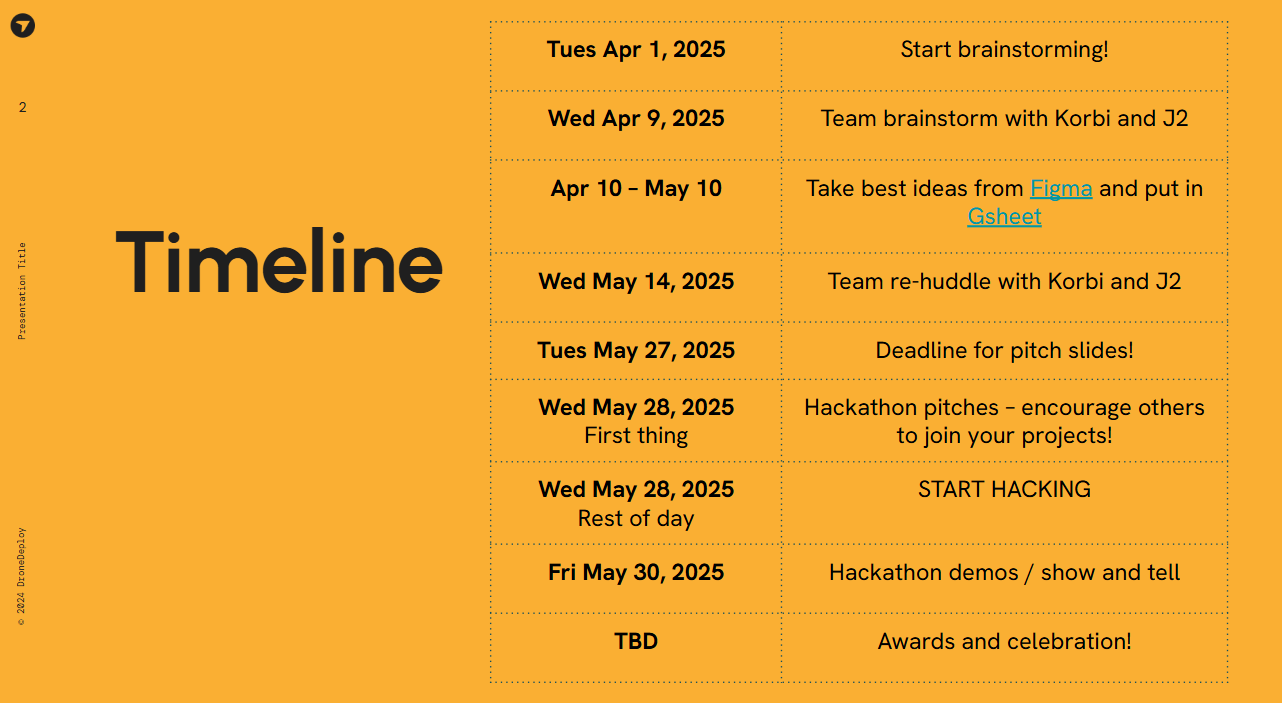
Sample hackathon timeline:
2. Notify the Executive Leadership Team (ELT)
- Share the intent to drive AI fluency, reimagine marketing workflows, and identify projects that could materially impact output or efficiency
- Communicate expected outcomes (e.g. prototypes, improvements to campaign processes, cost or times savings, etc.)
3. Align with IT and Legal
- Clarify the use of approved tools (see hackathon rules below)
- See what tools you already have access to and can leverage
- Confirm guardrails for privacy, data access, and experimentation
- Ensure a shared vision for how the resultant tools and workflows will be integrated into enterprise systems
- Tip: If IT or Legal is reticent, involve them in the brainstorming phase to help surface any potential issues. Let them know that nothing will be implemented without their review
4. Start from a shared baseline with optional pre-event training
- To level-set the team and build foundational AI skills, consider having everyone complete a short, structured training before kickoff (e.g. the Google AI Essentials certificate (~5 hrs self-paced) or the Marketing AI Institute Intro or Piloting AI for Marketers series). This ensures participants begin the promptathon with a common understanding of prompting, tool use, and responsible AI.
5. Share the rules upfront
- Establish clear rules and share them with participants upfront. Examples:
- Rule #1: Use only approved tools
- Rule #2: Nothing goes into production during hackathon week
- Rule #3: Everyone must participate and present at the end
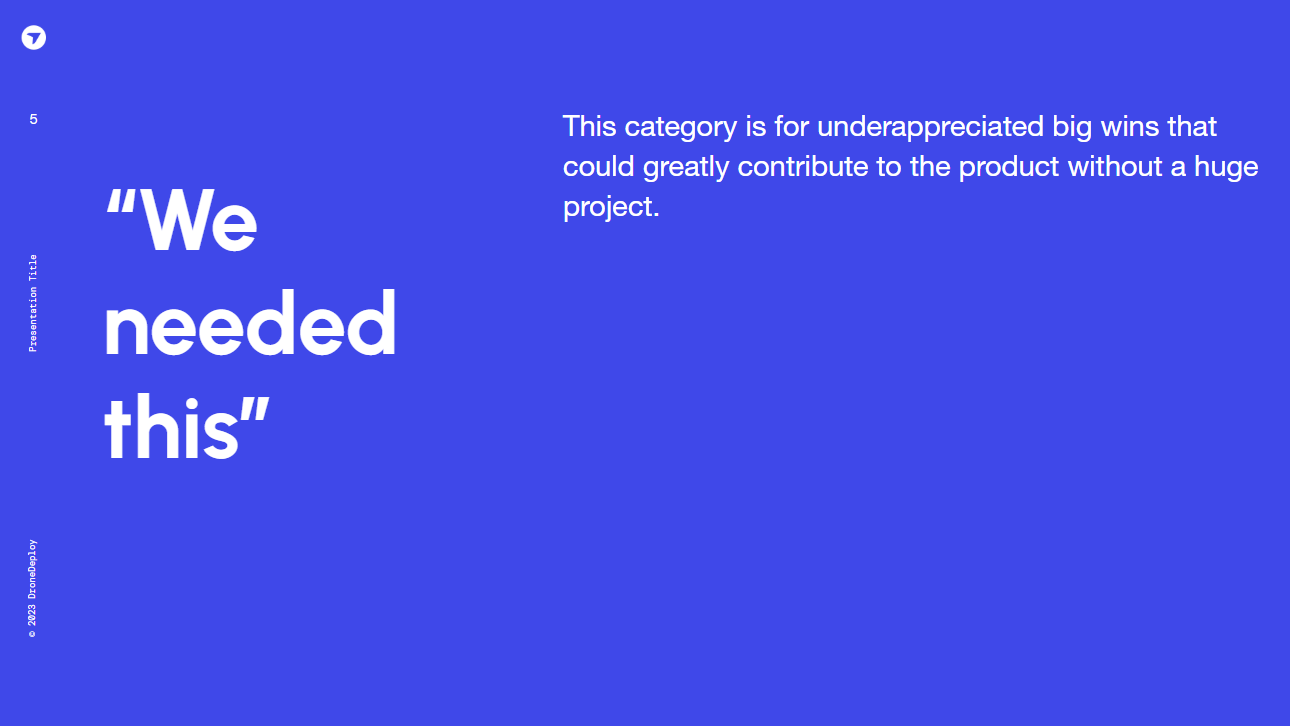
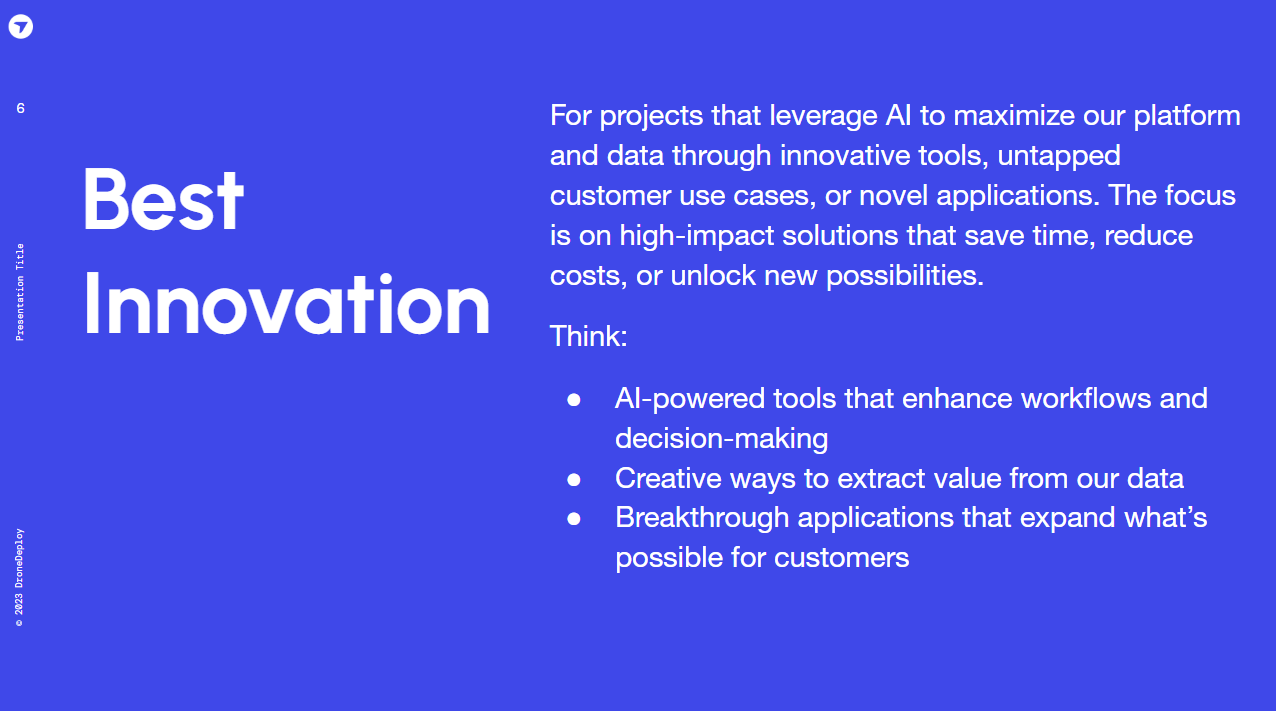
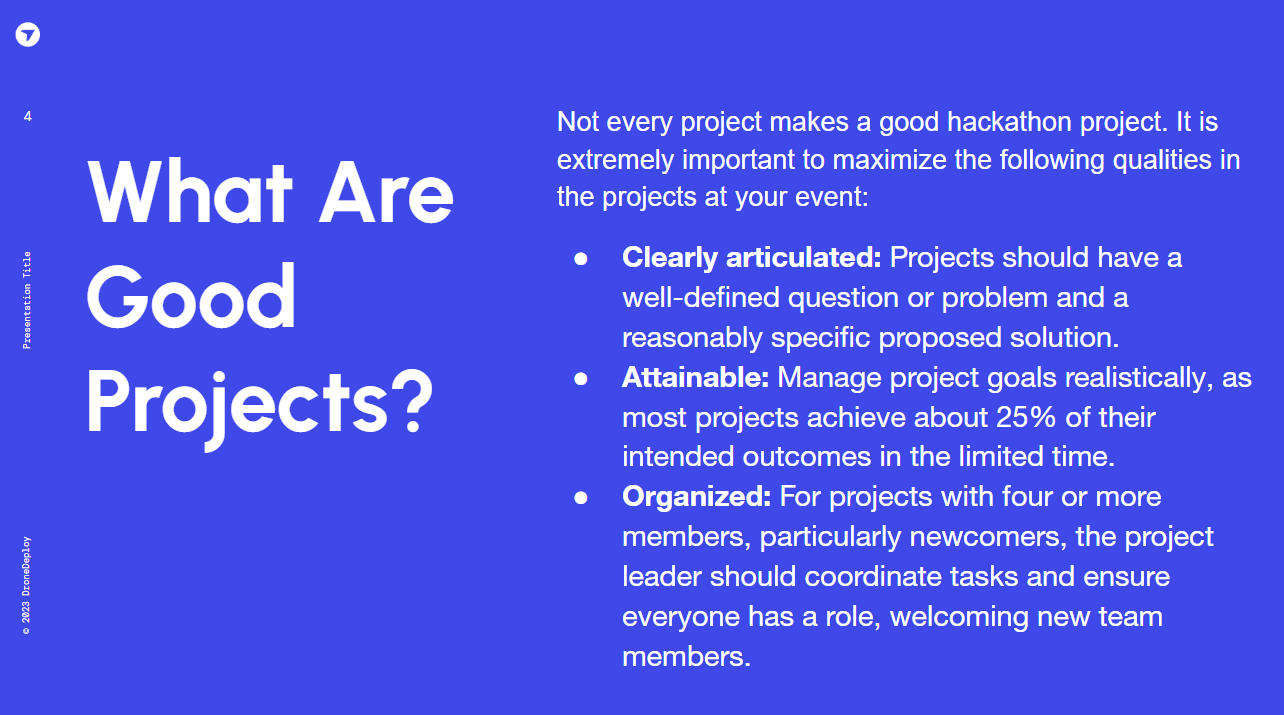
6. Establish judging criteria
Example criteria:
7. Set expectations and scope
- Reiterate the week is for exploration, not perfection
- Encourage creativity, fast iteration, and collaborative problem solving
- Many projects will require additional software, including non-AI native tools, so make sure to define ahead of time what tools can be used or requested
8. Seed brainstorming with high-value areas
- Before kickoff, gather the team to brainstorm ideas together
- Suggest problem areas where AI may be impactful. This helps teams focus their energy on opportunities most likely to create real value
- Consider guiding away from projects that simply automate current processes, favoring those that will add additional value or increase ROI. You may decide to add a rule that time savings alone is not a sufficient goal for a project
Hackathon week execution
Monday: Kickoff
Kickoff call with marketing and IT leads
- Re-share the vision, rules and goals
- Explain the evaluation framework (see below)
- Set the tone for curiosity, speed, and cross-functional teamwork
Project leader pitches
- Allow anyone with a project idea to present a 1-slide overview of their idea to participants
- Projects can aspire to automate processes, improve campaigns, boost internal productivity, or even engage customers directly
Project signups
- After the call, list all projects in a dedicated Slack channel
- Allow participants to ask clarifying questions and comment to join a team (the ideal team size is 3-6 people)
- Consider assigning a technical resource to each team
- Finalize team rosters by the end of day Monday
Tuesday-Thursday: Build
Heads down work time
- Give teams time to iterate quickly, test prompts, explore tool capabilities, and build mockups or workflows
- Encourage asynchronous updates and open Slack collaboration
Ad hoc support
- Provide a Slack thread for real-time support from IT or AI-savvy team members
- Have AI-savvy team members and members of marketing leadership to rotate through each group to offer support or guidance
Midweek: Team check-in
30-60 minute check-in session on Wednesday
Encourage every team to share:
- What they’ve been working on
- Any blockers or tool issues they’ve encountered
- Early wins or insights
This fosters cross-team learning and increases momentum midweek
IT and AI specialists should attend to lend support and help teams clear technical obstacles
Friday: Demo day
Project presentations
Ask each team to share, on a single slide:
- The problem they solved
- How they used AI
- What they built
- Measured or projected impact
- Recommendation: should this move to production?
Every team member must be present (Rule #3)
Encourage sharp, concise pitches with visuals or demos
Post hackathon follow-up
What happens after the hackathon determines whether the week translates into meaningful change.
Week after: Leadership decisions
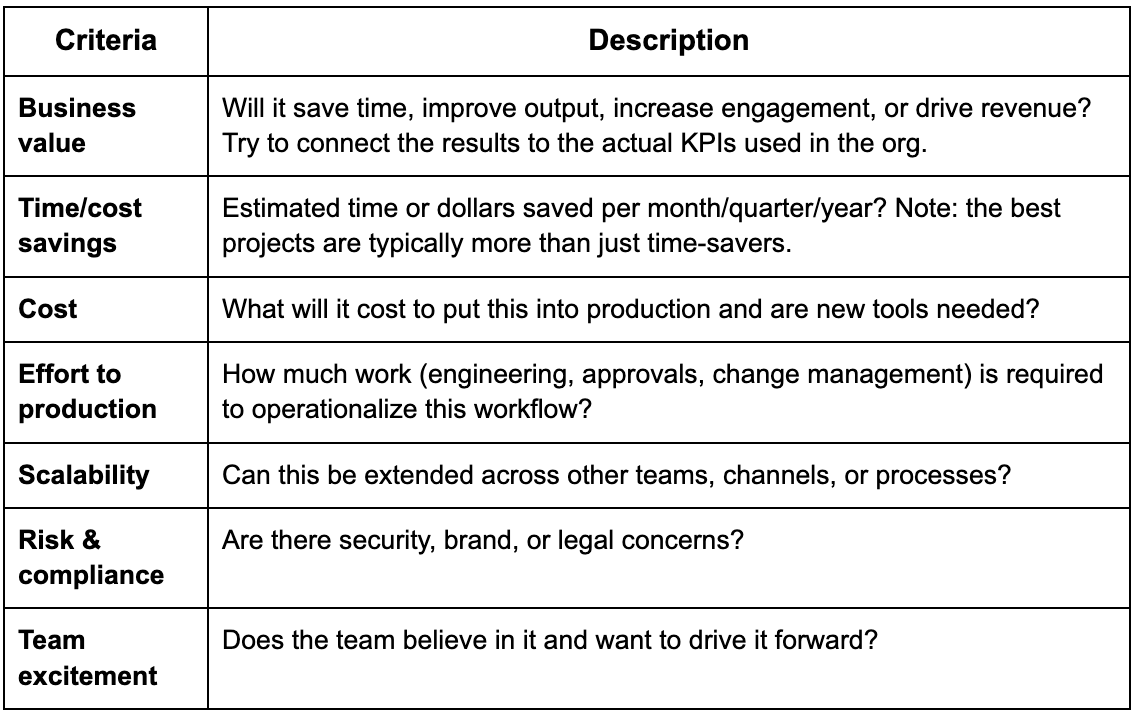
Project evaluation
- To make smart decisions about which projects move forward, assess each one against the following criteria
- You can use a simple 1-5 rating scale to prioritize the top projects
Announcement of winning projects
- Highlight which projects will move forward
- Confirm which tools or resources will be funded to move to production
Assign owners and next steps
- Name a lead and define the timeline for production
- Identify any dependencies (eg. IT support, vendor access, legal review)
Example outcome:
DroneDeploy selected two winners, but they also decided to investigate deploying three other projects. Winning didn’t mean moving to production automatically. Ultimately, 3 of the 5 “funded” projects graduated to a build-versus-buy analysis phase, where they were evaluated before being moved to production.
Ongoing: Track production progress
Updates at team meetings
- Each project in-flight should provide short updates at team meetings until launched or deprioritized
- Celebrate launches publicly to reinforce the value of experimentation
Final thoughts
As Matt Daly, CMO of DroneDeploy put it, there are always a million excuses not to do a hackathon. However, if you follow the process here, your team will thank you for the time you gave them to experiment and learn new skills.
A promptathon isn’t just about producing tools in the short term. It’s about unlocking your team’s imagination, developing new muscles, and accelerating toward the future of marketing.
If done well, it can spark a transformation in how your team thinks, builds, and operates, and uncover AI-driven ideas that truly change the game.