

By Robert Koehler, Scale GTM Advisor
Discovery, done well, is more than just a single stage in the sales process. Sadly, most sellers, having conducted a cursory discovery meeting, will jump straight into describing or demoing a product without worrying whether they’ve fully understood their buyer.
Great sellers, by contrast, conduct discovery throughout the sales process and repeatedly refer to accumulated knowledge to build trust and foster alignment. Specifically, they typically begin each and every sales call with an explanation of their understanding of the buyer’s business, often with the help of an “Our Understanding of Your Business” slide (see example below).
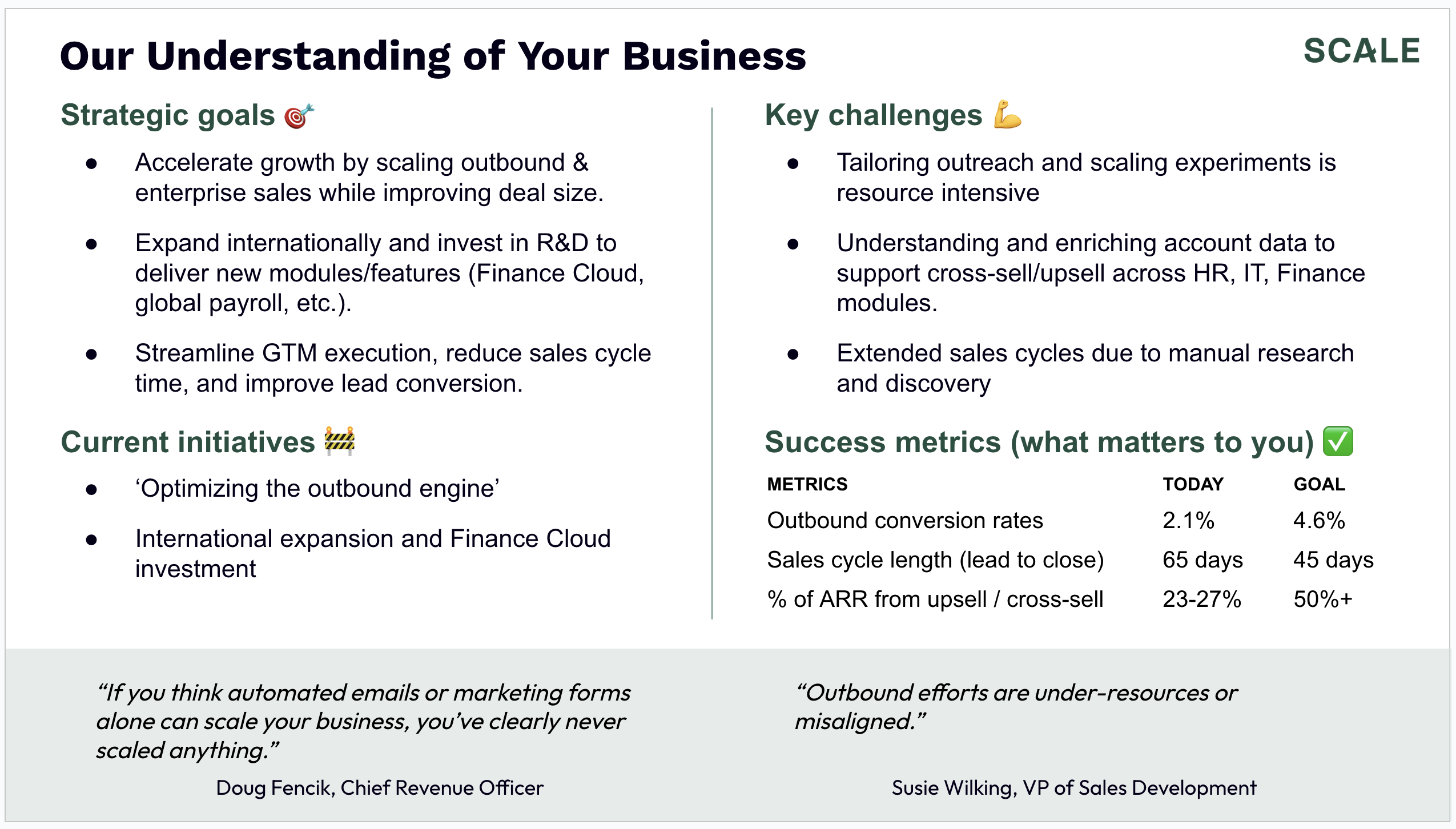
As the example shows, a typical “OUYB” slide is nothing fancy: it includes the seller’s high-level articulation of the buyer’s strategic goals, key challenges, and current initiatives, along with a few explanatory quotes supporting that articulation. Crucially, it also features the success metrics the buyer cares about most and the improvement they’re aiming to see by adopting the seller’s solution (among other possible initiatives).
Altogether, though simple, these elements help great sellers efficiently accomplish three critical objectives:
- Demostrating to the buyer that the seller has listened to them
- Anchoring conversations in the buyer’s priorities
- Fostering alignment on the desired outcomes and ROI from the seller’s solution
So while they may be simple, they really work. If you’re a seller or sales leader and you’ve not yet added this powerful tool to your arsenal, I encourage you to make a copy of my template here and get started right away.
As you make your version and start to test it with buyers, I also recommend following these best practices:
- Apply the rule of three: List no more than three bullets under each header, and keep them concise
- Use the buyer’s language: Use internal project code names and direct quotes as much as possible
- Do it at the beginning of the meeting: Pivot to sharing your understanding of the buyer’s business right after you introduce the purpose, agenda, and desired outcomes from the meeting
- Always be discovering: Use the opportunity to conduct more discovery in each meeting, inviting the buyer to validate your understanding and probe gaps in your knowledge
Now go out there and start impressing your buyers. And, if you have any questions along the way, please don’t hesitate to send them my way at robert@scalevp.com.