3 steps to start appearing in AI search
Quick-start guide for AI search visibility: content structure, authority signals, and Answer Engine Optimization.
Want to switch your team’s focus from SEO to AEO (answer engine optimization)? Take a moment to consider how different those two media are. Sure, both types of search are text-based. Yes, users still ask questions. But the way people ask questions has changed. Open your own search history to see: Do you really ask one question at a time anymore? Or do you ask a series? “It’s no longer question-and-answer,” says Sydney Sloan, CMO at G2. “The questions get really complex. It’s more of a chain of questions.” Further, you probably offer ChatGPT more context than you did Google—when searching for vendors, you tell it your tech stack, goals, and challenges.Many marketers feel paralyzed because this upends the old playbook and because it all keeps changing. What does it mean for your marketing when buyers dictate to AI rather than type? Work in collaboration with AI chatbots? Aren’t exposed to your branding until late in the cycle?That’s why Sydney took the stage at GTM 25 AI Summit to discuss what G2, the premier B2B review site, has learned about optimizing for AI search. G2’s own site is a major source of AI answers. Within, you’ll learn how you too can coax the new wave of answer engines to surface your answers when someone’s doing their research.This video is taken from Sydney Sloan’s talk at the Scale Venture Partners’ GTM 25 AI Summit.[embed]https://www.youtube.com/watch?v=6oDphvStWGU&list=PLYbBHiMJxgIjwX-ZA8NxG9EvZh7za0cLe&index=7[/embed]
AI is now core to the buying journey
LLMs set a land-speed record as the fastest-spreading work technology ever. Fifty percent of B2B software buyers say they’re more likely to start their search on LLMs rather than Google, according to a G2 survey of 2,000 companies. That’s up from 29% four months prior. Sydney feels confident it will continue to rise.
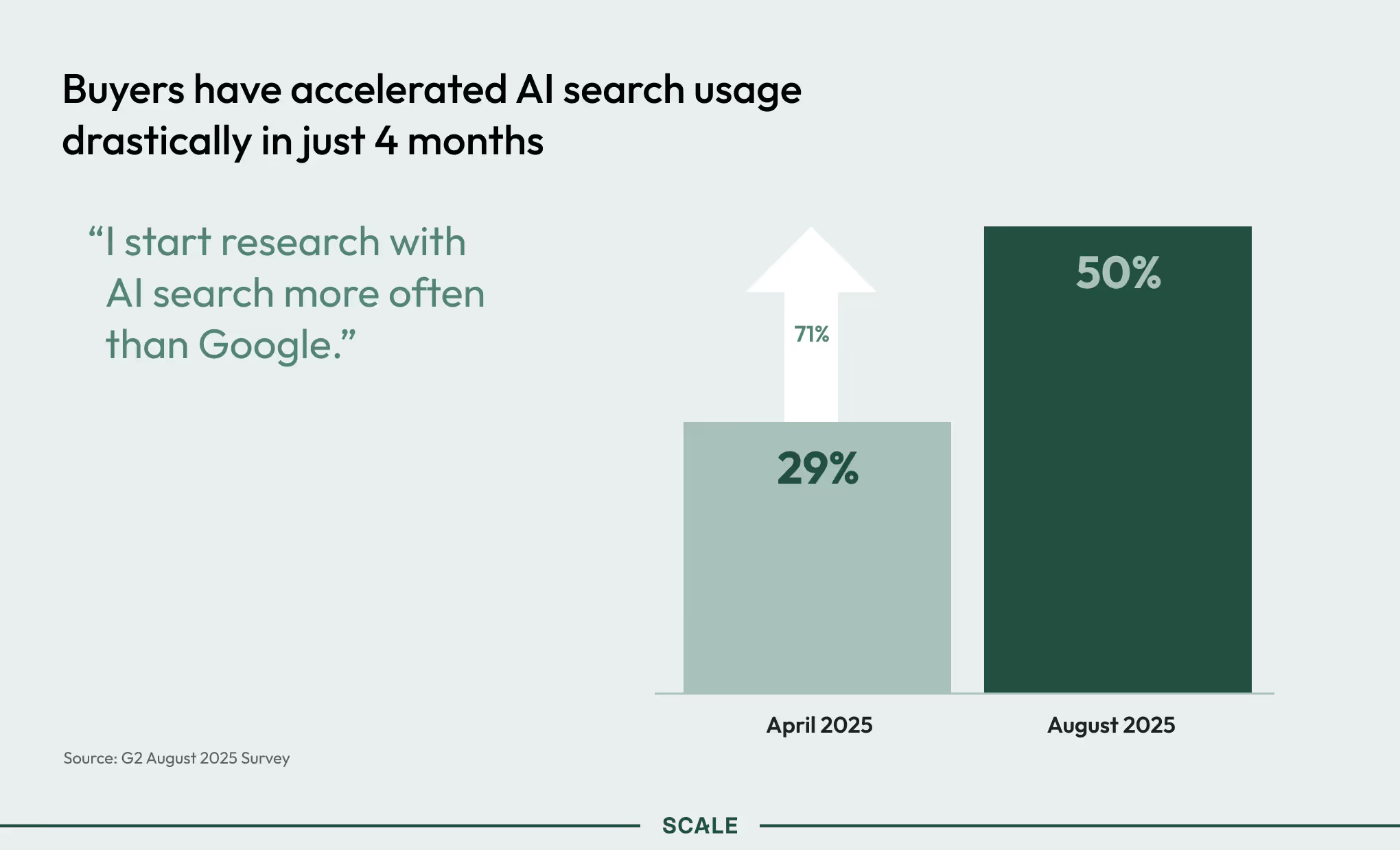
Here are the changes for your marketing team to consider:AI wants complete answers in natural languageAI search tools browse the internet using the same old crawlers as search engines, but the similarities end there. Traditional search, if it can now be called that, produces a list of sources that probably include a link to your website. Whereas AI search aggregates one answer from many sources and may or may not link to your website. It probably also provides enough context that the user doesn’t even want to visit your website. This means that while there is some crossover value from all the authority your team has been building with SEO articles and FAQs, there are likely also major gaps.“AI is searching for answers in natural language,” says Sydney. “So you’re going to want to think about the user-generated content where those answers may lie—in reviews on review sites. That’s where AI learns about what people like and don’t like, and how they compare products and weigh value.”

AI eats into your trafficAI answer engines cannibalize your organic search traffic. That is their purpose: to save people the click and summarize long reads. That means fewer people will arrive at your website. But it also means that those who do are probably further along in their evaluation and better qualified.“If you haven’t started thinking about how to optimize your speed from site visit to a meeting, you should be,” says Sydney. “Buyers arriving there are way further along in their research than before. You really want to understand that, and what the LLMs told them, which is based on user-generated content.” AI answer engines seek consensusIf your brand and message are different everywhere they appear—if all the reviews and teardowns about your software say something different—you won’t have much influence on what the AI says. That’s because AI relies on consensus signal simplification, says Sydney. “When the AI says ‘thinking,’ it wants to give you the right answer, and so it’s looking across many sites for consistency or sources of higher authority. If everything people say about you matches, that’s likely to reinforce the narrative the AI search tool picks up on.”Given all this, Sydney has arrived at three ways to switch your team’s strategy to generate AEO mentions.
Three ways to earn far more mentions in AEO
1. Build your brand where users live
Increasingly, LLMs are the front door to B2B buyer research. Marketers can expect less and less organic and paid traffic from other sources, but it’s not an all-or-nothing switch. This is simply about reallocating resources from your existing programs to what’s becoming the dominant way for buyers to shortlist vendors.

In G2’s survey, buyers say their number two source for unbiased information is software review sites. LLMs feel the same. AI search tools like ChatGPT and Claude rely heavily on forums, review sites, and self-publishing platforms like Medium. This creates a clear directive for marketers: If you want to be found in AI search, encourage more user-generated articles and reviews. “Only 5% of G2’s customers use an in-app review popup, yet they are all leaders. So, founders, don’t be nervous about putting questions in your product,” says Sydney. “Ask them for a review at moments of success. For example, the Vanta team asks for a review when someone gets their SOC 2 compliance. That’s ideal.”
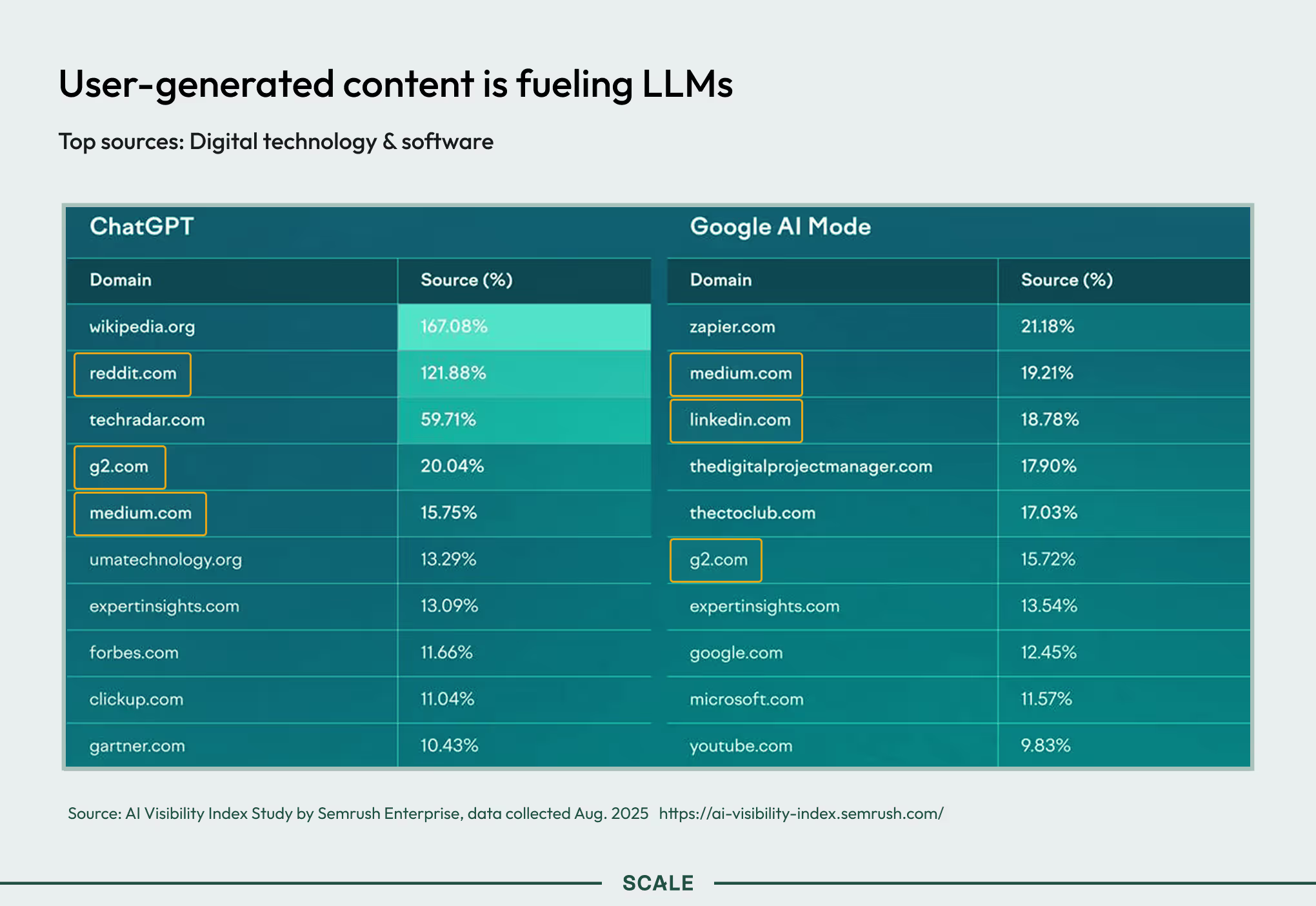
The quality of those reviews matters, and you must earn real ones. G2 knows that when an individual comes back to update their review, that indicates real value, so G2 gives it higher priority. G2 isn’t alone in carefully ranking reviews by such signals, and AI follows its lead. All these systems are trying to approximate real, human-assessed value. For this reason, Sydney advocates running a “review refresh” campaign to ask your reviewers to make updates—and to encourage real honesty. A five-star review may actually be less believable than a slightly lower one. “4.6 is the ideal review balance for believability,” says Sydney. “People want to see constructive feedback. Your role as marketer is to ensure you are addressing questions so other customers can see. It’s like when a hotel general manager replies to a questionable review. It makes you feel good about them and now you still might book to stay there.” Get your founders involved in those conversations in a way that feels natural to them. People trust real people, and founders have credibility and star power. This takes a real time commitment, so prep them for that, and convince them to carve out time to contribute on their own to LinkedIn, X, Reddit, or elsewhere.
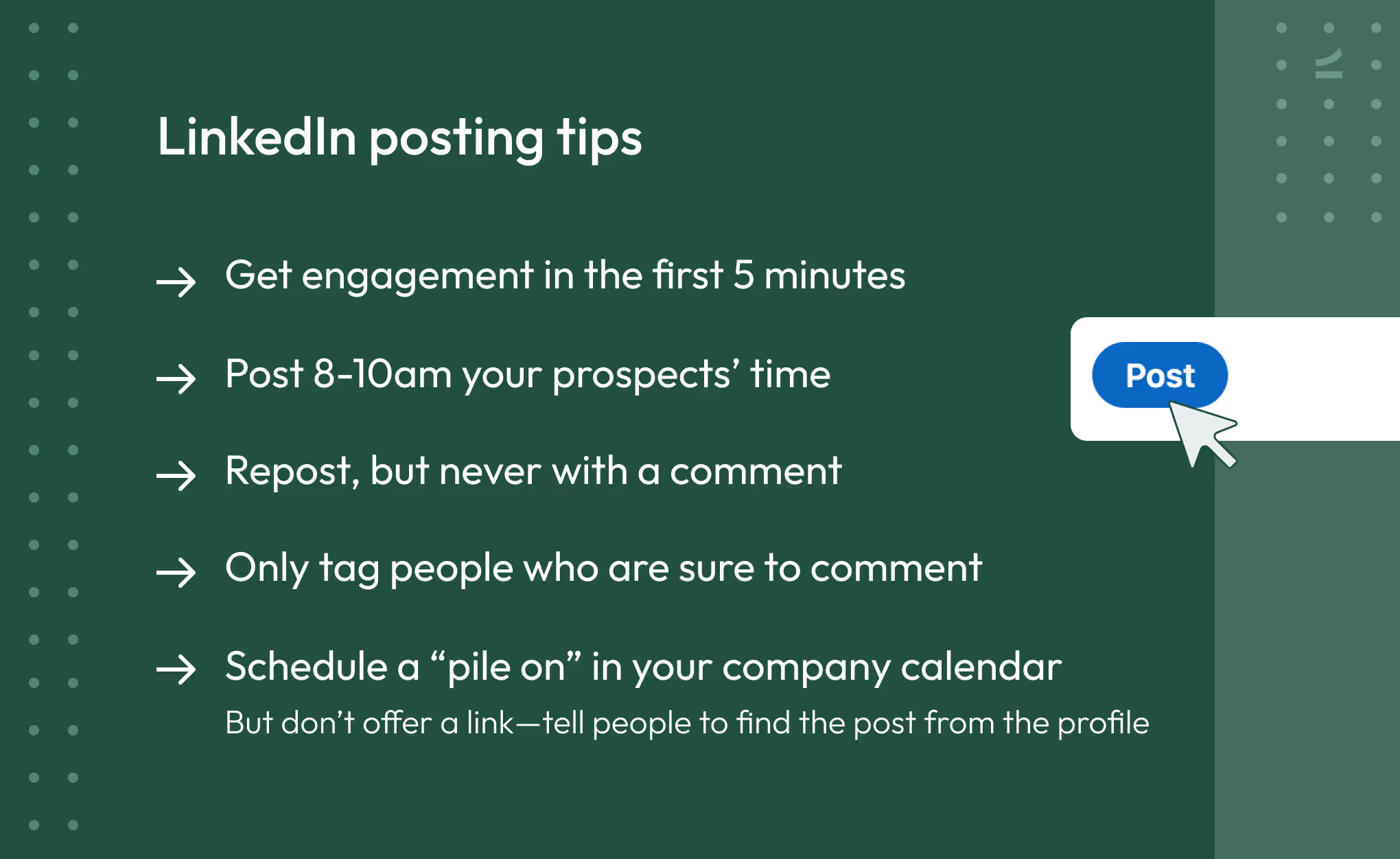
2. Retool your content strategy for greater relevance and consistency
As buyers do more of their research earlier, how do you engage them? In G2’s survey of 2,000 companies, most buyers said they can do their own research and only want to talk to salespeople during the evaluation. This means your content needs to reach those buyers earlier, which requires that you know them even better than you do today.Sydney recommends revisiting your persona and their jobs to be done, and creating more tailored content to match those persons and jobs. Try to distribute more of it through user-generated content around the web. This isn’t a huge departure from content marketing today—building a relationship and demonstrating value in advance of an evaluation—but it does mean shifting the balance toward more of a distributed model, off your main properties.“Today this means building out your AI personas and ideal profile, and ensuring they are constantly teaching themselves, updating themselves, and challenging themselves,” says Sydney. Her team automatically feeds Gong call summaries into a spreadsheet, which updates their AI knowledge base. “And then ask yourself, how do we integrate those personas into the content publishing workflow? Not a single piece of content should leave your company if it hasn’t been tested or validated against this persona.” Build a persona for the “LLM” buyer, too. “LLMs are one of your new customers,” says Sydney. “Build content to train the LLMs separate from your buyers’ jobs to be done. I’ve seen people build whole shadow websites with hidden content for LLMs to index, in the language and tone they want it to pick up. Or maybe their content editor builds their own blog as a separate authority, answering those exact questions.”Finally, ensure your content is consistent. For traditional search engines, you’d get dinged for too much repetition. In AI search, that’s actually the key to training the algorithm. You want to syndicate your reviews, key messages, and top content across many places to help nudge that consensus.
3. Get your PR game back on
Other sources LLMs value highly are traditional media outlets such as CNBC, Harvard Business Review, TechRadar, and other journalistic publications. This means that PR is back in fashion. “For a while, marketers were like, ‘PR doesn’t play anymore, we’re just going to be on LinkedIn,’” says Sydney. “But now everything I do—and I don’t care what it is—I put out a press release about it. Because that gets indexed. I also went back and hired a PR agency and am investing there.” In many ways, this is still the same old PR game as ever, only now it’s about getting indexed by LLMs to influence their answers. As always, search for the moments of unique, ownable drama. Sydney’s team saw the MIT study claiming that 95% of AI projects are failures and didn’t find it credible. They ran their own study with a counter-narrative and pitched it to VentureBeat and Forbes. “Publishing your own first-party research has never been more important,” she says.While the PR game may not have changed, the publications have. Many have gone through decades of declining budgets and cyclical firings, so there are fewer writers covering larger beats. They tend to want to write about the biggest existing players in your space, so it may be more difficult to find an angle. But there are also plenty of pay-to-play outlets where this barrier doesn’t exist. A Forbes Councils subscription can cost as little as $1,600, and Fast Company has a similar program. “You write it and their editors still vet it, so they'll go back and forth with you,” says Sydney. “And if you get a lot of engagement and your content is relevant, they'll all also ask you to answer questions in other editorial content. When you share that on your social media, you look authoritative.” And of course, that may get indexed by AI crawlers.Also pay attention to the AI citations you see when asking AI about your space. Take note of any writers or influencers with a preexisting following. Consider hiring them as a content strategist or expert contributor. “Clay did a great job of this. I didn’t know who Clay was a year and a half ago and now they’re everywhere,” says Sydney. “They hired like 75 influencers for a two-month period and completely drowned LinkedIn. Everywhere you looked, people were talking about Clay.”
The important thing is to start right now
If you aren’t yet building or executing a strategy for how you’re going to win in AEO, now is the time to begin. Don’t feel bad about what you’re starting from. Everyone is still trying to figure it out, and there isn’t a playbook yet. What is certain is that you should be focusing more on user-generated content and ensuring that everything people say about you is consistent and indexed. Continuously capture all that and feed it back into your team’s own LLMs, and run content through those synthetic personas—including a persona for the LLM. Some teams are going as far as to create undiscoverable but indexable sections of their website just for LLMs. There are no particularly wrong answers, aside from waiting to see how things play out. Much like the early dot-com rush to secure domains or SEO rush to early search authority, those teams running active AEO experiments are the likeliest to figure it out and edge out the competition.
News from the Scale portfolio and firm