AEO playbook for B2B software companies
Answer engine optimization (AEO)— what it is, why it matters now, and what to do about it. This is a practical playbook for winning visibility in AI-powered search, before your buyers ever visit your website.

Scale's Executive in Residence, Sydney Sloan, has been watching this shift longer than most. In this report, she walks through the data on how B2B buyers research software today — an uncomfortable picture if you've been running a traditional SEO playbook.
The numbers
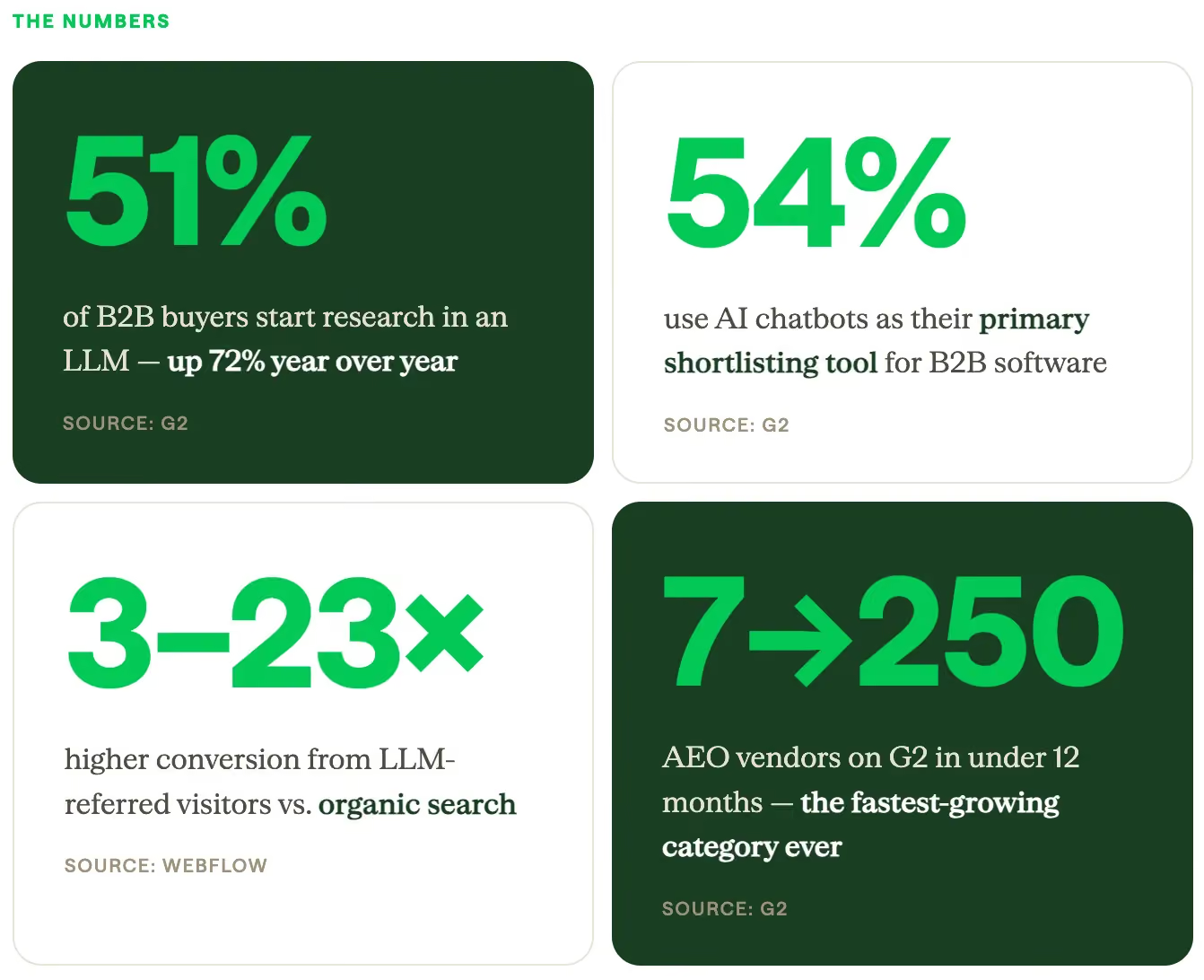
More than half of your buyers are now opening ChatGPT or Perplexity before they visit a vendor website. They're asking things like "what's the best tool for [category]" and getting a shortlist back in seconds. If you're not in that answer, you don't get considered — and you never know it happened.
Why this matters now
The mechanism behind AEO is different from SEO in ways that change the strategy significantly.
LLMs optimize for consensus, not authority. A backlink from a high-DA domain doesn't move the needle the way it used to. What moves the needle is the same message repeated across many sources that LLMs treat as credible — G2, Reddit, press releases, LinkedIn, peer publications. The more sources carrying your narrative, the morelikely an LLM treats it as true.
That shifts the economics in an interesting way: everyone starts from roughly the same baseline. A Series A company willing to run a focused 90-day push can appear in the same AI answer as a public market leader. We don't fully know how durable that advantage will be as the category matures — but the teams building the muscle now are ahead of the ones waiting for the category to settle.
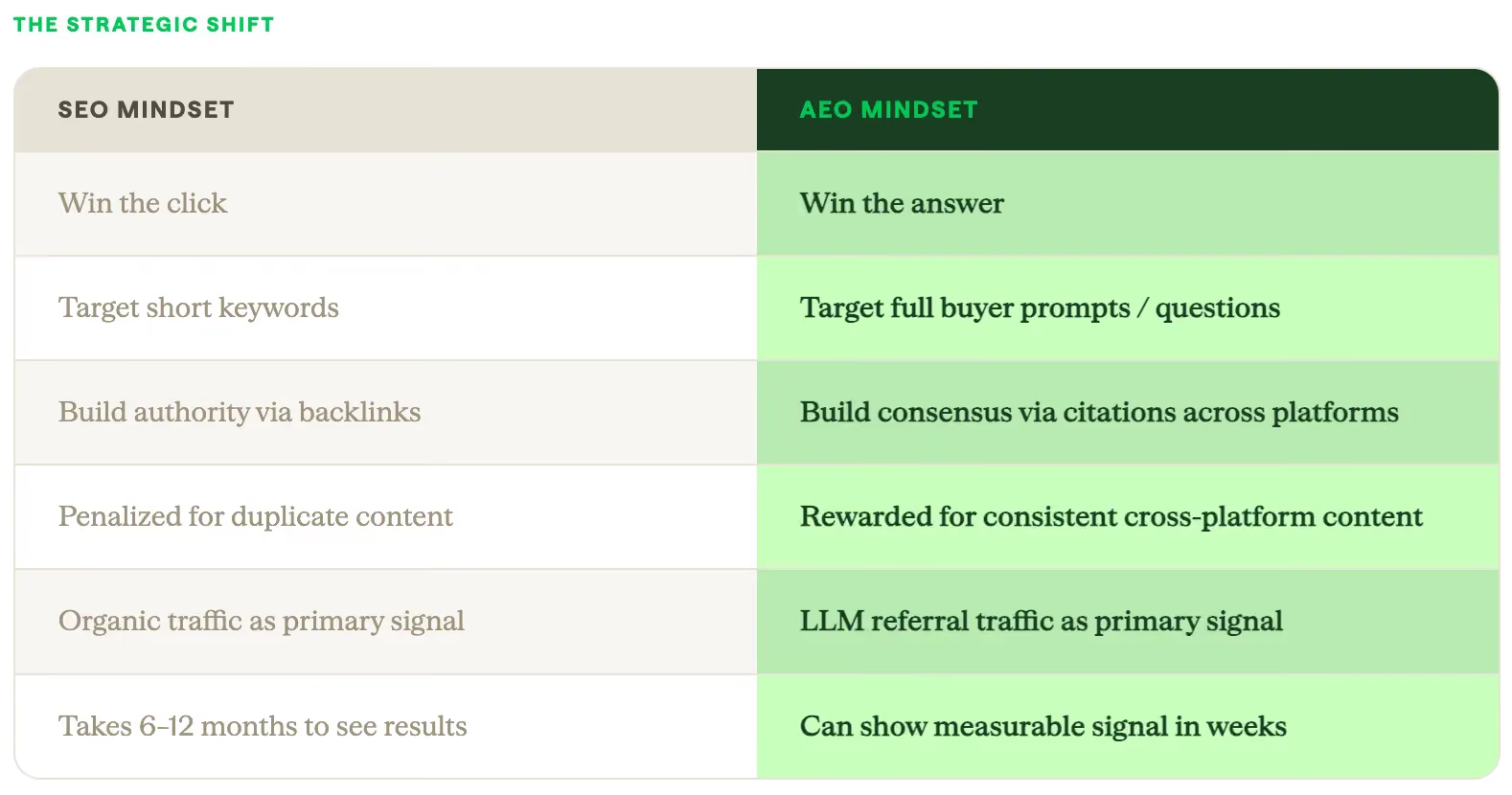
AEO also shows signal fast. SEO required 6–12 months of patience before you could read the results. AEO can produce measurable shifts in weeks, which means the iteration loop is much shorter. That's an argument for starting now and learning from what you see, not for waiting until the tools are more mature.
The strategic shift
Build AEO as an additive layer on top of SEO — don’t defund organic. The human traffic that arrives via organic is more qualified than ever. The shift is at the top of the funnel.
Content strategy
1. Build buyer personas from real customer language
- Feed Gong call recordings into Claude Projects or Gemini Gems to build personas on actual customer language and challenges.
- Decide upfront: are you targeting the buyer or the user? They ask different questions and need separate content tracks.
- Build content around each persona’s full jobs to be done — not just product-specific queries. Answer the broader role challenges your buyer faces to be part of the answer for all of their questions.
- Test all content against your personas before publishing.
2. Create FAQ-structured content matching real buyer prompts
- Convert your top 10 target keywords into full conversational buyer questions.
- Write 5–10 FAQ-style content pieces targeting common prompts in your category.
- Structure answers in natural language — not polished marketing copy. Customer voice performs better.
- Add FAQ sections to product pages, pricing pages, and comparison content.
- Include FAQ format in press releases — LLMs recognize PR Newswire.
3. Build deliberate competitive content
- “Alternatives to [market leader]” pages with honest pro/con tables are highly cited by LLMs.
- Consider publishing RFP templates that reflect your evaluation criteria.
- Ramp publishes content purely for LLM consumption with no expectation of human clicks — this is a legitimate strategy.
- GrowthX has helped companies execute this effectively. AirOps is an AI content builder tool.
4. Distribute everywhere — duplicate content is now a feature
- Google penalized duplication. LLMs reward consensus — they interpret repetition across trusted sources as truth.
- Cross-post the same Q&A content to your site, G2, press releases, LinkedIn, and relevant publications.
- No penalty for republishing. The more sources that carry your narrative, the higher the citation probability.
Where to build citation authority outside your website
G2 — the #1 citation source for B2B software across LLMs
- G2 reviews are cited verbatim in LLM responses. Optimize your profile now — descriptions, features, pricing, and integrations — in jobs-to-be-done language.
- Build a systematic review collection program tied to lifecycle milestones: onboarding completion, in product satisfaction questions that link to a review, after successful QBRs, renewals, positive CSAT responses and NPS cycles.
- Use CSM spiffs, email signatures, and partner channels to drive review volume.
- G2 reviews auto-syndicate to AWS Marketplace, Azure Marketplace, and soon to Capterra (now owned by G2).
- Seed G2 discussion questions that match the exact prompts buyers use in AI search.
Reddit — authentic engagement only
- Reddit and G2 are the most-cited sources for software comparisons across LLMs.
- If your customer base is small, have actual customers answer questions in relevant subreddits. The community will expose inauthentic engagement.
- Mirror Reddit discussions on your own community site to build consensus across sources.
PR and newswires
- LLMs do not distinguish paid from earned placement. Newswires (~$600/release) and trade publications are treated as trusted sources.
- Embed FAQs directly in press releases — this format performs well in LLM citations.
- Get on a newswire at least quarterly with product updates and customer wins with validating quotes.
- Consider paid bylines in trade publications relevant to your category. A lot of publications allow you to write for them — LLMs don’t care whether it’s paid or organic.
Influencers and thought leaders
- AI-generated content is increasingly detectable and less trusted. Authentic human voices get cited. AI can help with content production but ensure you have human in the loop reviews and publish by authorities (including Founder).
- Identify 3–5 aligned influencers or authorities in your category whose content gets cited in AI responses.
- Publish long-form video with full transcripts on YouTube, is a growing citation source especially for Google summaries.
- Short clips of you and influencers answering the same question work well on LinkedIn.
- The B2B influencer is likely to become more valuable as verified human voices carry more weight.
Technical quick wins
- Audit your site for LLM readability — use HubSpot’s free AEO grader or Webflow’s AEO checker.
- Open your knowledge base for bot access — gated content cannot be cited.
- Structure key pages in table and FAQ format, which LLMs prefer for extraction.
- Add LLM referral tracking in GA4 now — you want this baseline before traffic scales.
- Separate bot from human traffic in your analytics — human traffic lags LLM referrals but converts significantly better.
- Consider a micro-site or subdomain for a specific buyer persona — test with 2–3 personas before committing.
30/60/90-day roadmap
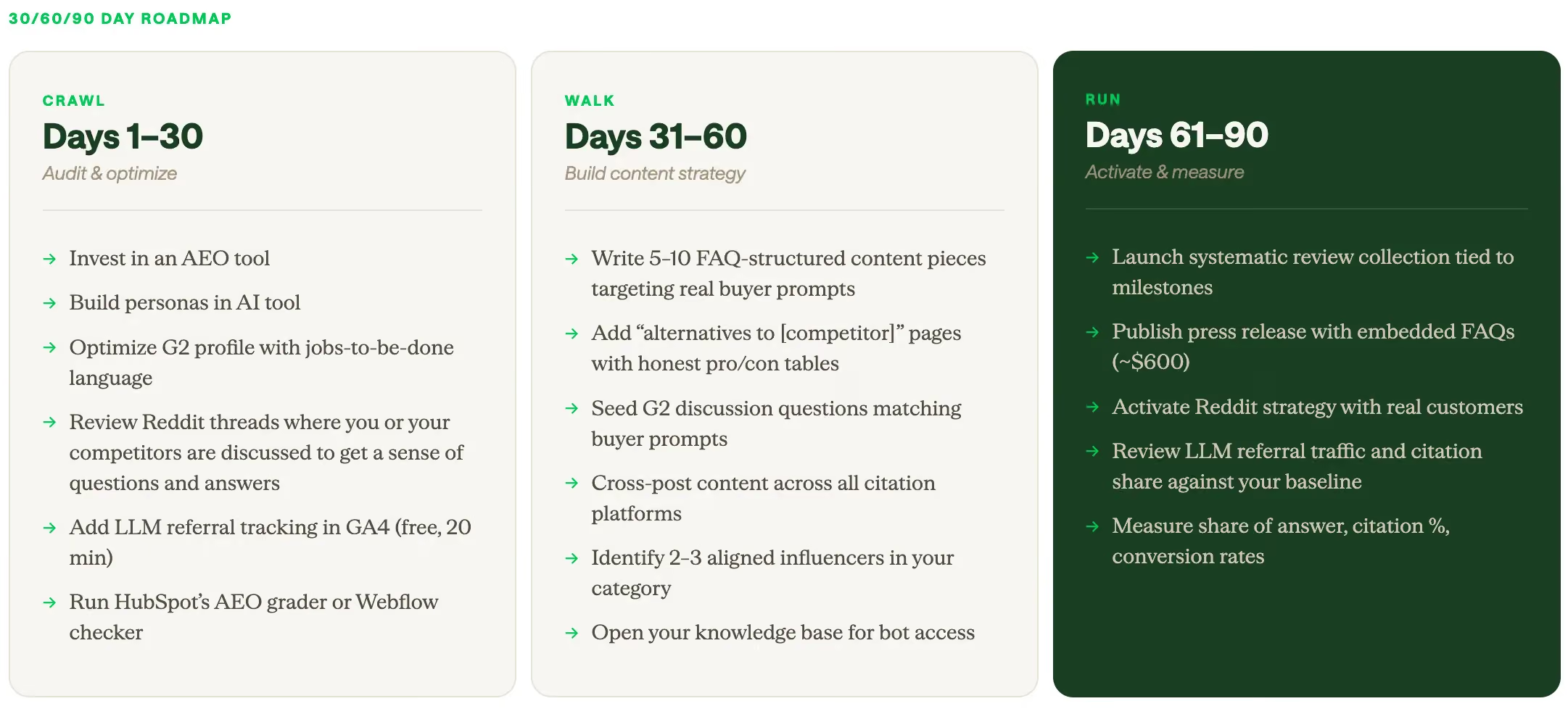
CRAWL — Days 1–30: audit & optimize
- Invest in an AEO tool
- Build personas in AI tool
- Optimize G2 profile with jobs-to-be-done language
- Review Reddit threads where you or your competitors are discussed to get a sense of questions and answers
- Add LLM referral tracking in GA4 (free, 20 min)
- Run HubSpot’s AEO grader or Webflow checker
WALK — Days 31–60: build content strategy
- Write 5–10 FAQ-structured content pieces targeting real buyer prompts
- Add “alternatives to [competitor]” pages with honest pro/con tables
- Seed G2 discussion questions matching buyer prompts
- Cross-post content across all citation platforms
- Identify 2–3 aligned influencers in your category
- Open your knowledge base for bot access
RUN — Days 61–90: activate & measure
- Launch systematic review collection tied to milestones
- Publish press release with embedded FAQs (~$600)
- Activate Reddit strategy with real customers
- Review LLM referral traffic and citation share against your baseline
- Measure share of answer, citation %, conversion rates
What to measure
Core AEO metrics
- % of target prompts you own — run your top buyer prompts quarterly and track your share of answer.
- Sentiment: how positive or negative are your company citations.
- Citation rate: how often your content is referenced.
- LLM referral traffic: segment bot vs. human in GA4; watch conversion rate on LLM-referred sessions.
Supplement with self-reported attribution
- “How did you first hear about us / start your research?” should be added to demo request and trial forms immediately.
- First-touch and last-touch attribution are both blind to AI-assisted journeys — self-reported data fills the gap.
Tools to evaluate
- Profound AI: consistent leader in AEO for citation tracking, visibility and simple content creation.
- AirOps: strong for content workflows and visibility reporting for AEO and SEO.
- G2 AI Visibility Dashboard (powered by Profound): good starting point if you are already on G2.
- Semrush Enterprise AI Visibility Index: first major benchmark for share-of-answer.
- HubSpot AEO grader and Webflow checker: free, good starting points.
With 250 vendors now in the AEO category on G2, many budget-friendly options are emerging.
Organizational ownership
AEO is cross-functional. No single owner works. Here's the suggested structure by function:
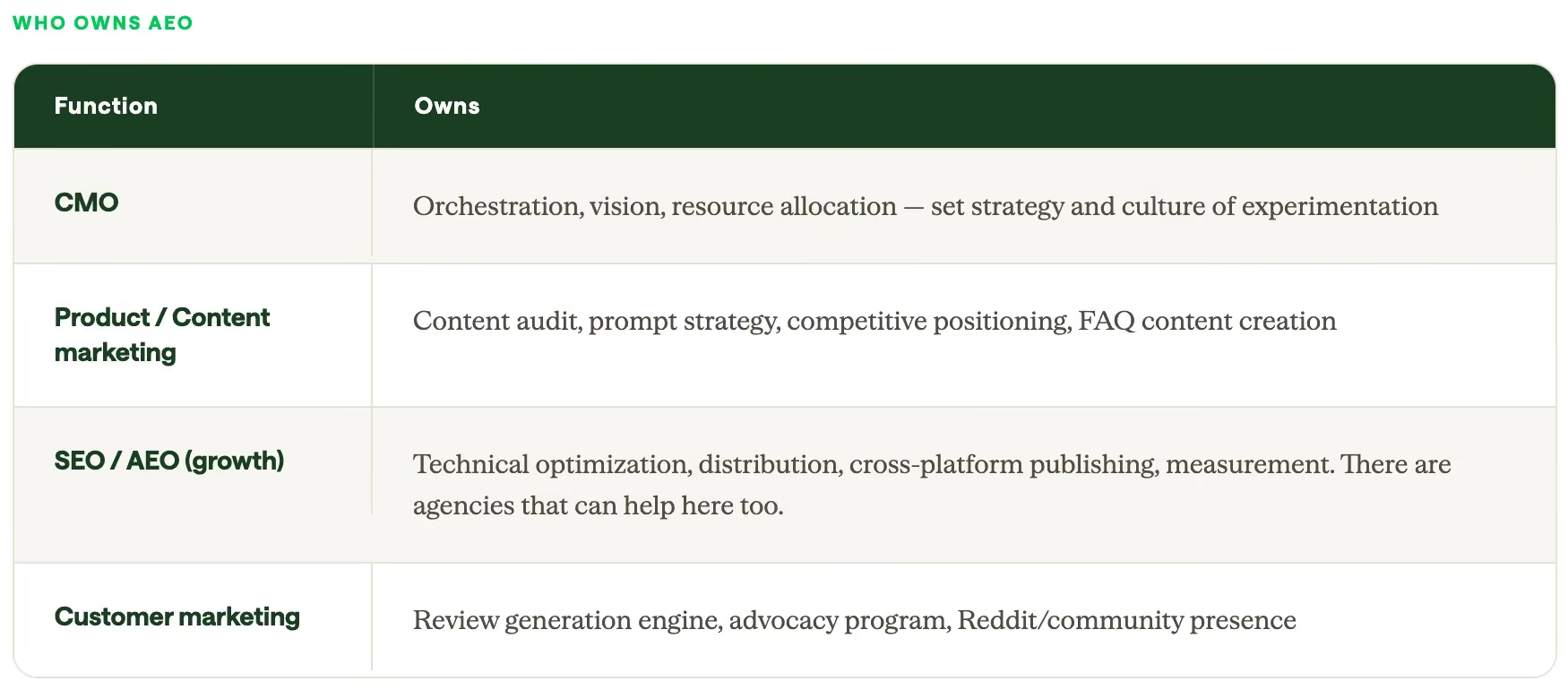
Keep strategic direction in-house. Use agencies and tool vendors for execution support only. This discipline is still being defined — a culture of rapid experimentation matters more than a perfect plan.
First move — do this today
Open ChatGPT, Perplexity, and Claude. Ask each:
- “What are the best tools for [your category]?”
- “What are the top alternatives to [market leader in your space]?”
- “What do [your buyer persona] use to [core job to be done]?”
Screenshot every result. Document where you appear, where you don’t, what language is used, and who is mentioned. That gap analysis is your entire AEO brief — and it takes 30 minutes.
News from the Scale portfolio and firm